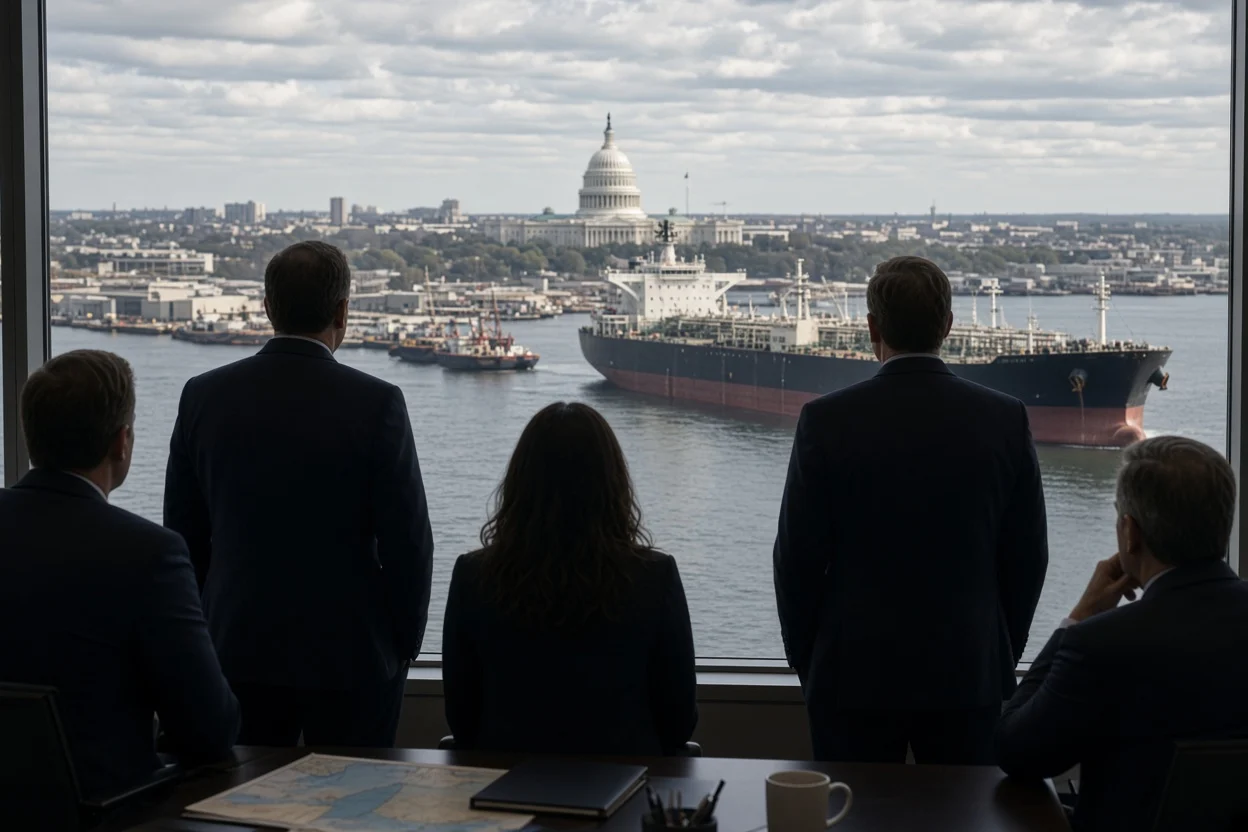
As of November 5, 2026, the OFAC entries we reviewed contain no decision or license easing sanctions on “shadow fleet” tankers. There are only press reports about discussions in Washington, and they cannot be read as rules currently in force.
What the press reported
In mid-October 2026, Reuters reported, as relayed by Ukrainian and Polish media and citing an anonymous US official, that Washington is considering allowing sanctioned tankers to carry oil and oil products that are not themselves subject to sanctions. According to these reports, Russian and Iranian oil would remain under sanctions, and companies wishing to use such vessels would have to apply to the US Department of the Treasury. US Energy Secretary Chris Wright was also cited as saying that the administration is discussing easing sanctions on “shadow fleet” vessels.
These are press reports and anonymous statements. In the entries we reviewed, we found no official OFAC document authorizing this.
What the official OFAC list shows
On the OFAC website’s “Recent Actions” list, we reviewed entries for the period from October 14 to November 4, 2026. None of their titles mentions tankers or Russian oil. We read the October 21 entry: according to its description, it concerns Iran-related licenses GG and HH (wind-down of transactions involving Karnakis and Karnakis; limited safety and environmental transactions and cargo discharge for persons and vessels blocked on October 21, 2026) and Russia-related license 131K (negotiations for the sale of Lukoil International GmbH). According to the entry’s description, none of them concerns the transport of Russian oil by tankers. We checked only this list for the stated period, not OFAC’s entire license register, so we do not claim that no other decision exists.
Two positions voiced in publications
- Supporters of easing say it would lower freight and fuel costs.
- Critics warn that it could weaken pressure on Russia.
These are the arguments of the sides as relayed by the media. There is no verified official data in open sources on how many vessels and what cargoes this might affect, so it is too early to assess the scale of the effect.
What is already officially known about sanctions on Iran’s shadow fleet
Sanctions against Iran that have already been imposed are a separate matter. According to a US State Department statement of October 8, 2026, the State Department imposed sanctions on ten entities, six individuals and five vessels involved in trade in Iranian oil or petrochemicals, under US presidential Executive Order 13846. The same day, the Treasury Department imposed sanctions on 17 entities and their vessels, under Executive Order 13902. These are decisions in force, unlike the easing under discussion.
What to watch next
- Whether the official text of a decision or license appears on the OFAC website. Read the document itself, not the headlines about it.
- Which vessels and cargoes it covers and whether Russian and Iranian oil remain under sanctions.
Sources
- US considering easing sanctions on shadow fleet, 2026-10-16
- US to Consider Easing Sanctions on Russia’s Shadow Fleet
- United States Department of State — Operation Economic Outcast Sanctions on Iran’s Shadow Fleet…
- US Department of the Treasury, OFAC — Recent Actions (list of recent decisions)
- OFAC, Recent Actions, 21.10.2026


Leave a comment
Sign in with Google